
Lower Back Pain From Running: Biomechanics-Based Fixes That Actually Work
Lower back pain from running rarely starts all at once.
It usually shows up as tightness halfway through a run, a dull ache later that day, or stiffness the next morning that makes you question your next workout. If that sounds familiar, this is not random. It reflects how your body is handling load, step after step.
Approximately 80% of people will experience back pain at some point, and runners are no exception.
As you ramp up mileage for summer and fall races, the last thing you want is lower back pain derailing your training.
Here’s the problem:
A typical 5 to 7 mile run involves roughly 8,000 to 10,000 foot strikes. Each step sends force equal to 2 to 3 times your body weight through your system. If something is slightly off, whether it is pelvic control, trunk position, or how you absorb load through your hips, that issue gets repeated thousands of times.
That is why your back may feel fine early in a run, then tighten, fatigue, or ache as the miles add up.
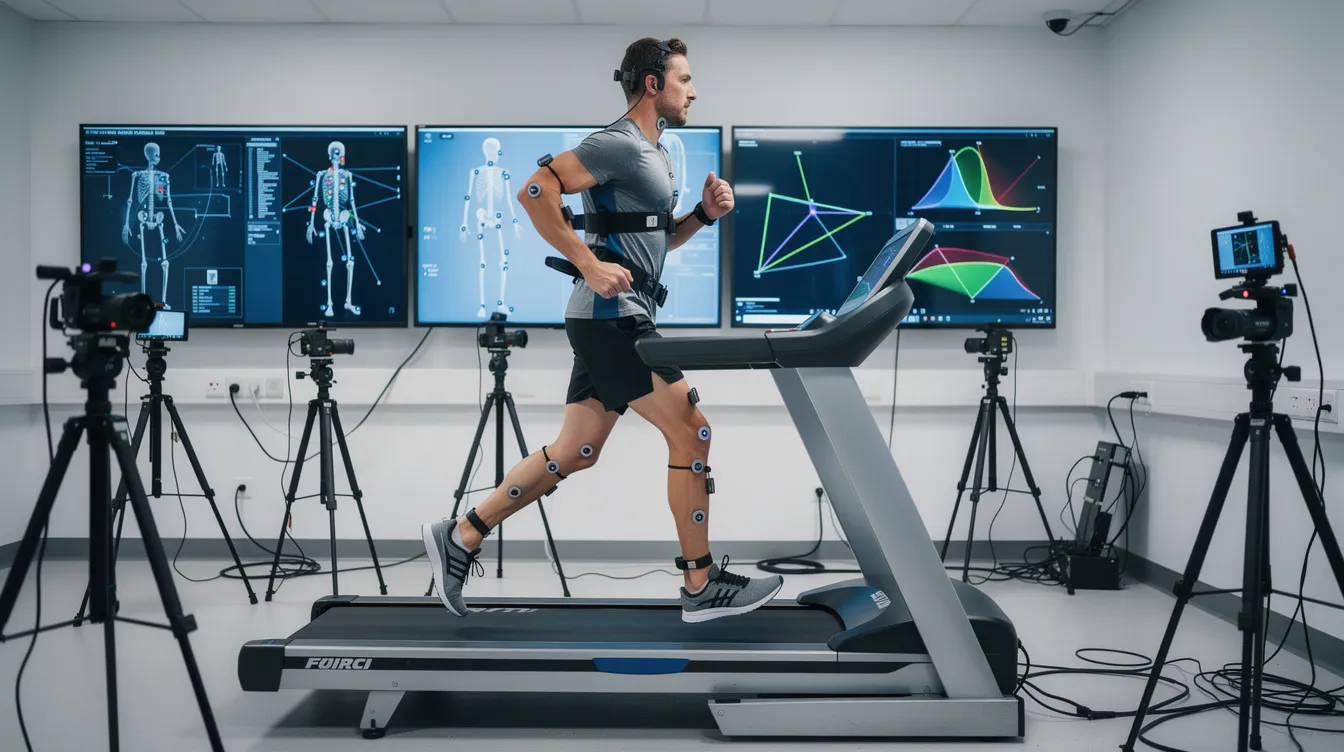
At Studholme Chiropractic in Denver, we combine advanced biomechanics testing, including our Noraxon 3D treadmill, motion capture, and muscle oxygen sensors—with chiropractic care and targeted rehab to identify the exact driver of each runner’s pain.
This article will help you identify the common causes of lower back pain from running and give you clear, practical strategies you can start this week. These same changes often improve hip pain, knee pain, and sacroiliac irritation because they address how your entire system manages load.
Common Causes of Lower Back Pain From Running
Low back pain in runners rarely comes from the spine alone. It reflects how the pelvis, hips, trunk, breathing, and lower limbs work together.
The five main causes we’ll cover:
Pelvic drop (hip drop)
Low cadence and overstriding
Overly upright trunk
Quadriceps weakness
Diaphragm weakness
Each of these can be seen clearly with slow-motion video or 3D gait analysis, which is why we test runners on our Noraxon system instead of guessing. Let’s unpack each cause, how to recognize it, and what you can do about it.
Common Cause #1: Pelvic Drop (Hip Drop)
During midstance, when you are on one leg, the opposite hip should drop slightly, typically 5 to 7 degrees. When that drop increases, the lower back muscles work harder to stabilize the pelvis with every step.
On video, this looks like one hip visibly sagging when the runner is on their stance leg. It’s often more obvious on uphills or late in long runs when fatigue sets in and glute activation drops.
Excessive pelvic drop is usually a glute strength and control issue, specifically the gluteus medius and maximus,rather than a “weak spine.” This issue often appears alongside knee pain or IT band irritation.
Simple home tests to spot hip drop:
Single-leg stance in front of a mirror (look for more than 2cm drop)
Single-leg squat (look for knee collapsing inward more than 5 degrees)
Record yourself running on a treadmill using your phone at 240fps
In our clinic, we quantify pelvic drop angles precisely with 3D motion capture to identify which side is driving symptoms. We find asymmetries in 60-70% of cases.
How to Fix Pelvic Drop: Glute Strength and Control
“Get stronger glutes” isn’t just a cliché—we prioritize isolated and then functional glute training for almost every runner with lower back pain.
Progression structure (2-3 days per week minimum):
| Phase | Exercises | Sets/Reps |
|---|---|---|
| Isometric | Glute bridges and clamshells with a resistance band | 10 sets of 1-minute holds |
| Single-leg strength | Single-leg deadlifts, hip thrusts | 3 sets of 8–15 reps |
| Dynamic | Lateral step-ups, squat variations | 3 sets of 10–12 reps |
Focus on pelvic control, keeping your waistband level in a mirror, rather than just "feeling a burn." Research shows this progression yields 25-40% strength gains in 6 weeks, reducing hip drop by 3-5 degrees.
At Studholme Chiropractic, we tailor glute work based on 3D force plates and EMG data to address right-left muscle imbalances that often mirror unilateral pain as part of broader running injury prevention strategies.
Common Cause #2: Low Cadence and Overstriding
Cadence is your steps per minute (spm). Dr. Jack Daniels popularized the “magic 180” guideline based on elite runner observations, but most runners naturally sit closer to 155-170 spm at easy paces.
Lower cadence often leads to overstriding, where the foot lands too far in front of the body. This increases braking forces, reduces shock absorption meaning more force transmits directly into your lumbar spine and facet joints.
Common symptoms of low cadence:
Jarring feeling in the low back with each footstrike
“Braking” sensation at each step
Pain worse on downhills or at the end of long runs
Feeling like you’re fighting against your own momentum
Use a GPS watch or phone app to check your current cadence over a 3-5 minute interval at typical training paces. If you’re consistently under 160 spm, overstriding may be contributing to your back pain.
How to Improve Cadence Without Forcing It
Gradual change is key. Aim for a 3-5% increase above your baseline cadence over 4-6 weeks, don’t just suddenly jump to 180 spm.
Practical cues that work:
“Land your foot closer under your hips”
“Quicker, lighter steps”
“Run like you’re on hot coals”
Metronome practice protocol: Use a phone app or music with specific BPM for 4 x 2-minute segments during easy runs at your target cadence, with relaxed running between. This trains rhythm without overwhelming your system.
In our clinic, we adjust cadence while monitoring real-time forces and muscle oxygen data to ensure changes actually reduce stress on the spine rather than just feeling awkward.
Common Cause #3: Overly Upright Trunk (“Run Tall” Gone Wrong)
The classic coach cue “run tall” often backfires. Many runners overshoot this advice and end up leaning backwards , creating poor posture that loads the back extensors excessively.
An overly upright or backward-leaning trunk shifts load into the lumbar extensors and away from the glutes, causing muscle tightness and aching in the low back.The ideal trunk position is a very slight forward lean of about 10 degrees from the ankles, not the hips. We routinely measure this on our Noraxon 3D treadmill and find that runners with excessive extension have 15-25% more loading on their back muscles.
Observable signs of an overly upright trunk:
Chest lifted high
Hips trailing behind the feet
Reduced hip extension
Minimal glute engagement
This issue often pairs with quadriceps weakness and core weakness, making proper running form correction challenging without concurrent strength training.

Techniques to Improve Trunk Lean and Glute Engagement
Trunk lean corrections are subtle and best learned with video feedback, but you can start with simple cues.
Effective cues:
“Lean your chest slightly over the finish line”
Lean forward from your ankles, not your waist
“Imagine you’re running into a strong wind”
Practice protocol: During easy runs, use short intervals like 30-45 seconds 6 to 8 times throughout your run to practice new positioning. This prevents fatigue-driven compensation while building new motor patterns.
Pair posture work with targeted glute strengthening exercises and hip flexor mobility so your body can sustain the new position without straining the low back. Without addressing the underlying muscle groups, cues alone won’t create lasting change.
At Studholme Chiropractic, we show trunk angle and glute activation in real time on 3D motion capture, then build individualized drills to make the new pattern automatic.
Common Cause #4: Quadriceps Weakness and Shock Absorption
Runners love to run. For many, gym work feels like pulling teeth. However, research consistently shows that strength training 2-3 times per week reduces running injuries by up to 50% and improves running economy by 4%.
The quadriceps serve as primary shock absorbers at footstrike, helping control knee flexion and dissipate impact before it reaches the pelvis and lumbar spine. When quads are weak, runners either land too stiff (minimal knee bend) or collapse excessively (too much flexion).
Both scenarios overload the lower back muscles and drive runners into a too-upright posture,feeding back into Cause #3.
Associated signs of quad weakness:
Sore knees after hills or tempo runs
Difficulty with stairs or downhill hiking on Colorado’s dirt trails
Late-race form collapse in half or full marathon runners
Reliance on the upper body for momentum
In our biomechanics lab, we analyze ground-reaction forces and joint angles to determine whether quad weakness contributes to back symptoms as part of comprehensive recovery-focused chiropractic care.
Practical Quad Strength Program for Runners
Quad strength can be built efficiently in 20-30 minute sessions, 3 times per week, with significant returns for both pain reduction and running performance.
Foundation exercises:
| Exercise | Sets x Reps | Tempo |
|---|---|---|
| Squats | 3 x 20 | 3 sec down, 3 sec up |
| Lunges | 3 x 20 | 3 sec down, 3 sec up |
| Step-ups | 3 x 20 per leg | Controlled |
| Leg press | 3 x 20 | 3 sec eccentric |
The last 3-5 reps should be challenging. If they’re easy, increase your resistance using free weights or resistance bands.
Time-saver option: One slow set of 50 walking or stationary lunges (3 seconds down, 3 seconds up), 3 times per week. Research shows this creates meaningful strength gains comparable to multiple-set protocols.
We individualize quad work at Studholme Chiropractic based on each runner’s gait analysis and current training load, ensuring resistance training complements,not sabotages,key workouts and races.
Common Cause #5: Diaphragm Weakness and Breathing Mechanics
The diaphragm generates 60-80% of your inspiratory force and serves as the most important core muscle for maintaining intra-abdominal pressure. It’s crucial for runners tackling anything from 5Ks to marathon training on Colorado trails.
As runners fatigue, breathing becomes faster and shallower. The diaphragm struggles to simultaneously manage breathing and maintain core stiffness, leading to compensation by the lower back muscles. This creates the familiar pattern of tight, aching low back that worsens as a run progresses.
Typical signs of diaphragm weakness:
Early breathing difficulty at moderate paces
Side stitches that won’t resolve
Tight low back that worsens as breathing becomes labored
Difficulty maintaining good posture late in races
Breathing rate exceeding 35 breaths per minute at threshold
We often see this pattern on muscle oxygen and respiratory testing,runners hit a “breathing wall” before reaching true muscular or cardiovascular limits. Improving diaphragm strength and breathing patterns with VO₂ max and respiratory performance testing reduces muscle strain in the low back while improving endurance simultaneously.
How to Train Your Diaphragm Like a Muscle
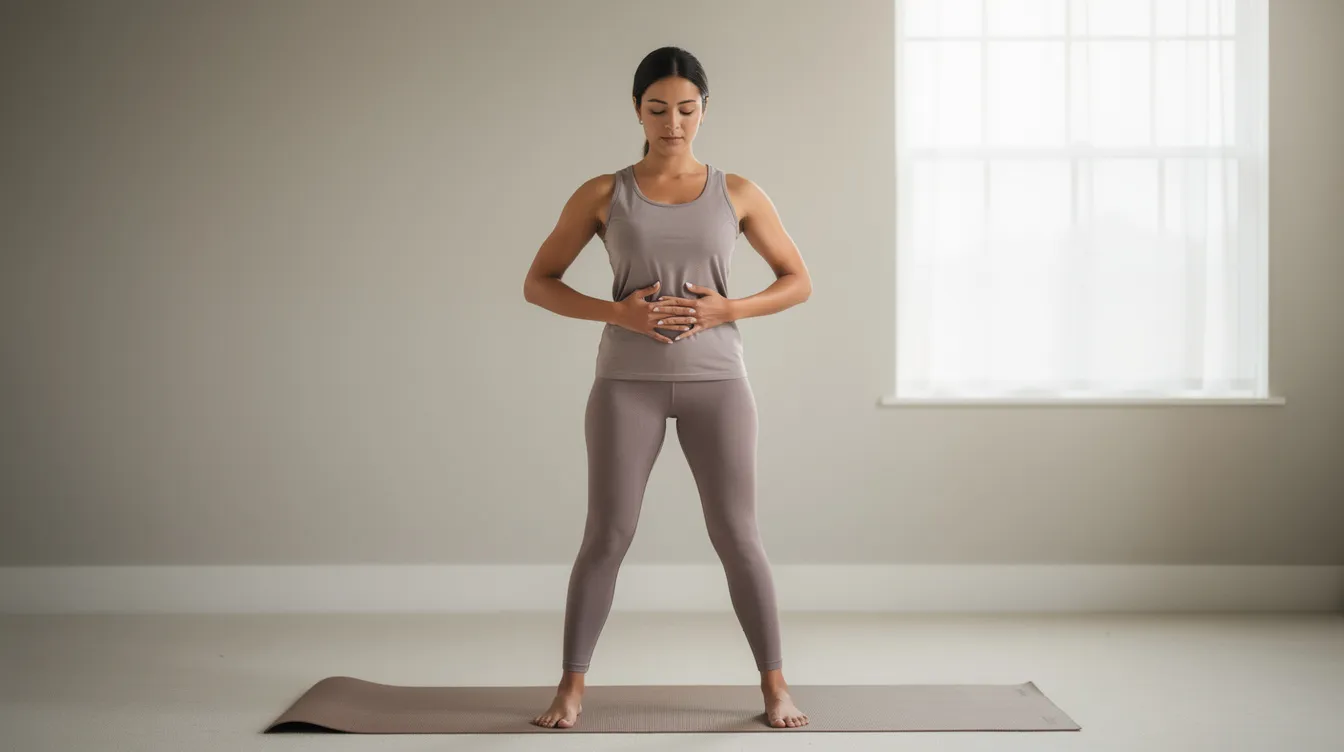
The diaphragm responds to targeted resistance training just like your quads or glutes, with measurable improvements within 4 weeks of consistent work.
Tools and protocols:
BreatheWayBetter or similar respiratory trainers add resistance to inhalation/exhalation
Start with 5-10 minutes of dedicated breathing training, 4-5 days per week
Progress resistance as you adapt, targeting 20-30% strength gains
No-equipment option: Practice nasal breathing on easy runs, the first 10-15 minutes of a 45-minute run. Focus on slow, deep belly breaths rather than shallow upper back and chest breathing. This trains breathing efficiency and forces the diaphragm to work through greater ranges.
At Studholme Chiropractic, we integrate respiratory testing and coaching into performance plans, allowing runners to see objective improvements in breathing capacity and low back comfort over time.
Relief Strategies You Can Use This Week
While biomechanics and strength are long-term solutions, you likely need short-term relief to keep training smartly. Here’s your warm up routine for managing acute pain:
Immediate load management:
Reduce weekly mileage by 20-30% for 1-2 weeks
Avoid sharp intensity spikes
Choose flatter routes while pain calms
Home care tools:
Heat (10-15 minutes) before runs for muscle relaxation
Before and after you run try to do some light glute activation with bands
After you run do some gentle mobility work targeting surrounding muscles: glutes, hip flexors, upper back
Stay active with cross training:
Cycling, pool running, elliptical, or brisk walking
Maintain tissue resilience without running impact
Red flags requiring immediate attention: Persistent, worsening, or radiating pain down the leg, numbness, tingling, or weakness affecting the sciatic nerve should be assessed by a medical professional before continuing any physical activity. When to Get a Professional Running Analysis
Most runners can resolve mild back pain with the strategies above. But recurring lower back pain from running typically has a biomechanical root cause that can be measured with proper tools not just guessed at.
Consider a gait analysis if you have:
Pain that returns every training cycle at similar mileage
Back pain that appears only when running but not with other activities
One-sided symptoms that don’t respond to basic strengthening exercises
Pain that limits your running performance despite rest and stretching exercises
A history of related joint pain or running injuries
What a comprehensive session looks like: At Studholme Chiropractic in Denver, we focus on runners who want to resolve pain and improve performance. Our approach includes:3D Noraxon treadmill assessment, video from multiple angles, joint angle measurements, trunk lean analysis, and when appropriate, muscle oxygen or respiratory testing.
We combine this data with hands-on assessment of the lumbar spine, pelvis, hips, and knees. The outcome is a clear, individualized plan with specific targeted exercises, cadence targets, trunk cues, and follow-up milestones, not generic “rest and stretch” advice that most runners have already tried.
How Studholme Chiropractic Helps Runners Stay Pain-Free
Our clinic focuses on active individuals and marathon runners in the Denver/Boulder area who want to resolve injuries and improve overall performance,not just “get adjusted and hope.”
Our approach combines:
Biomechanics testing (3D motion capture, Noraxon treadmill, muscle oxygen sensors)
Individualized rehab programming based on your specific movement data
Emphasis on strength work for glutes, abdominal muscles, quads, and trunk
Breathing training for diaphragm strength and efficiency
Running-specific drills to lock in correct running form
We understand the incidence and risk factors for running-related pain through pain research and clinical experience with hundreds of runners. Whether you’re training for a 2026 half marathon, a trail ultra, or returning to running post-injury, we build programs that account for your goals and timeline.
We offer a free discovery visit where you can discuss your history, goals, and determine whether a full analysis is appropriate. You don’t have to run through pain,or quit running altogether.
Call Studholme Chiropractic at 303-939-0004 or schedule online to have your running mechanics properly analyzed. Let us show you why so many runners have trusted us with their injuries and are now running pain free.
FAQ
Is it OK to keep running if my lower back hurts?
Mild soreness that warms up within a few minutes and doesn’t worsen during your run can sometimes be managed with load reduction and exercises. However, sharp, increasing, or radiating pain is a red flag requiring attention.
Cut back distance and intensity for 1-2 weeks while working on cadence, trunk lean with shoulders relaxed, and core and back muscles strength. Look straight ahead and maintain proper posture throughout. Stop running immediately and seek assessment if you notice leg weakness, numbness, or any changes affecting bowel or bladder function.
How long does it usually take for running-related low back pain to improve?
Acute muscle strain can improve in 1-3 weeks with appropriate care and dynamic movements. Biomechanical issues like pelvic drop or quad weakness typically need 6-12 weeks of consistent strengthening and technique work.
Many runners feel meaningful relief within a few sessions once the main mechanical driver is identified. We track progress with repeat gait analysis and symptom check-ins so you see objective improvements rather than hoping you’re getting better. University hospitals and sports medicine research support this timeline for most common injuries.
Can core exercises alone fix my lower back pain from running?
General core work like:planks, dead bugs, and side planks can be helpful but are rarely sufficient on their own if underlying gait problems remain unaddressed. A weak core contributes to back pain, but so do overstriding, upright trunk position, and diaphragm weakness.
Combine core training with glute and quad strength exercises, cadence adjustments, and breathing work for a complete solution. Runner’s World often recommends core work, but certain muscles throughout the kinetic chain need attention too. In our clinic, core work is one pillar in a broader program based on each runner’s movement data.
Do I need special running shoes to prevent lower back pain?
While worn out shoes or inappropriate footwear can worsen impact and contribute to pain, running shoes rarely fix fundamentally flawed running mechanics on their own. Most runners overestimate shoe importance and underestimate form and strength.
Replace shoes every 350-500 miles and consider visiting running stores for a gait-based shoe fitting, especially if you’ve worn the same model for years. During our running analyses, we examine how shoe choice interacts with cadence, stride, and trunk position to prevent injury and guide individualized footwear recommendations.
What’s the difference between normal running soreness and a real back injury?
Normal soreness is usually symmetrical, dull, improves with gentle movement and a hamstring stretch, and resolves within a few days after harder efforts. It responds well to basic physical therapy principles and doesn’t disrupt sleep.
Injury signs include: sharp or catching pain, one-sided symptoms, pain that worsens with each run, night pain, or pain with tingling and numbness down the leg. Repetitive stress can transition from soreness to injury over time. If you experience these warning signs, book an evaluation for a thorough spinal and running-specific assessment, don’t wait until the problem sidelines you from your goal race.