
3D Running & Gait Analysis in Denver
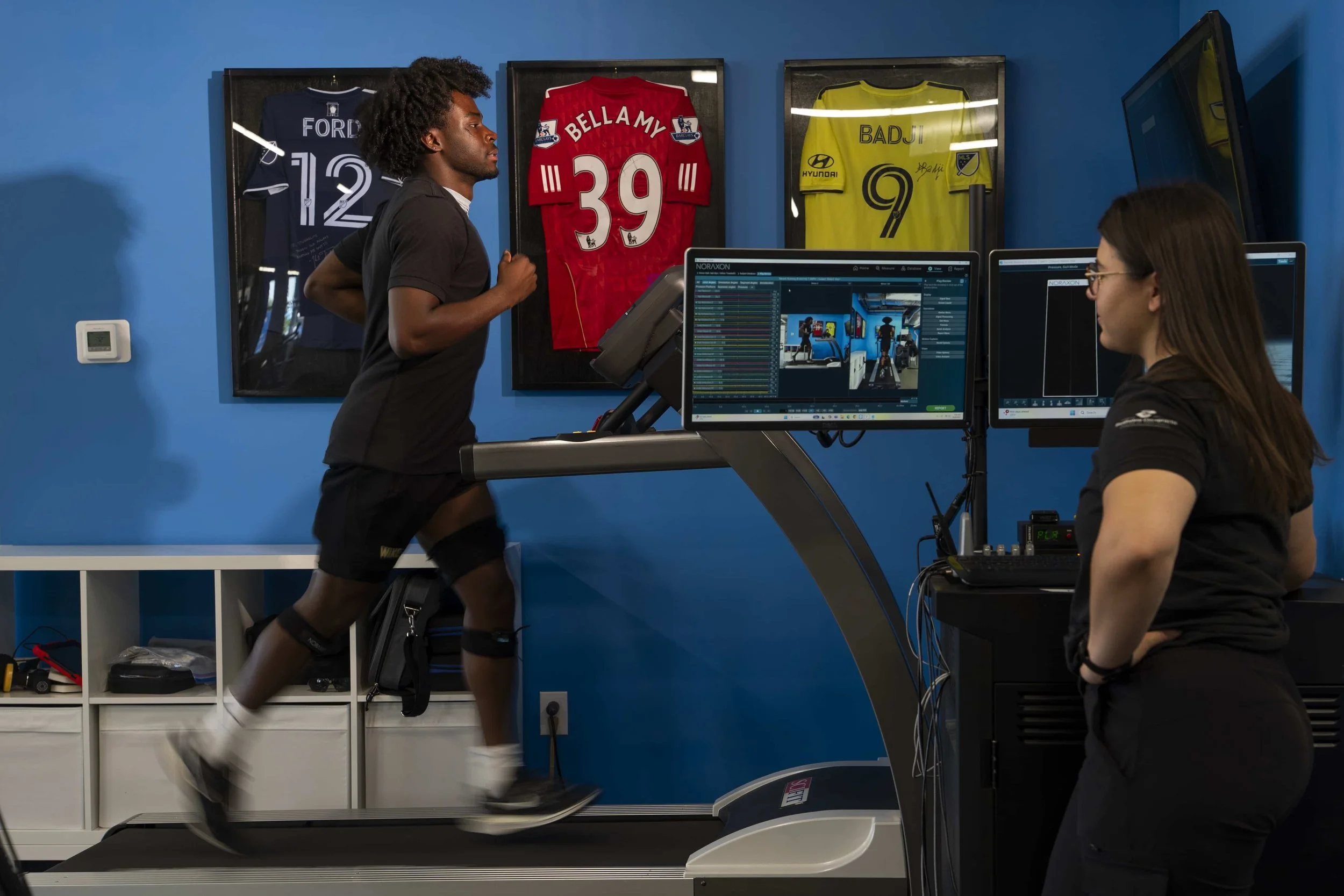
If you’ve searched for gait analysis near you in Denver, you want to understand how you move, not just be told to stretch more. At Studholme Chiropractic on South Broadway, we use 3D motion capture to measure how you walk and run in detail, then use what we find to guide your training, your rehabilitation, and your running plan.
Gait analysis is one part of the testing we use to build a clearer picture of how you move and perform. We combine the results with your health history, physical examination, and run-training program to better understand what is contributing to your symptoms or limiting your running volume.
What Is Running Gait Analysis?
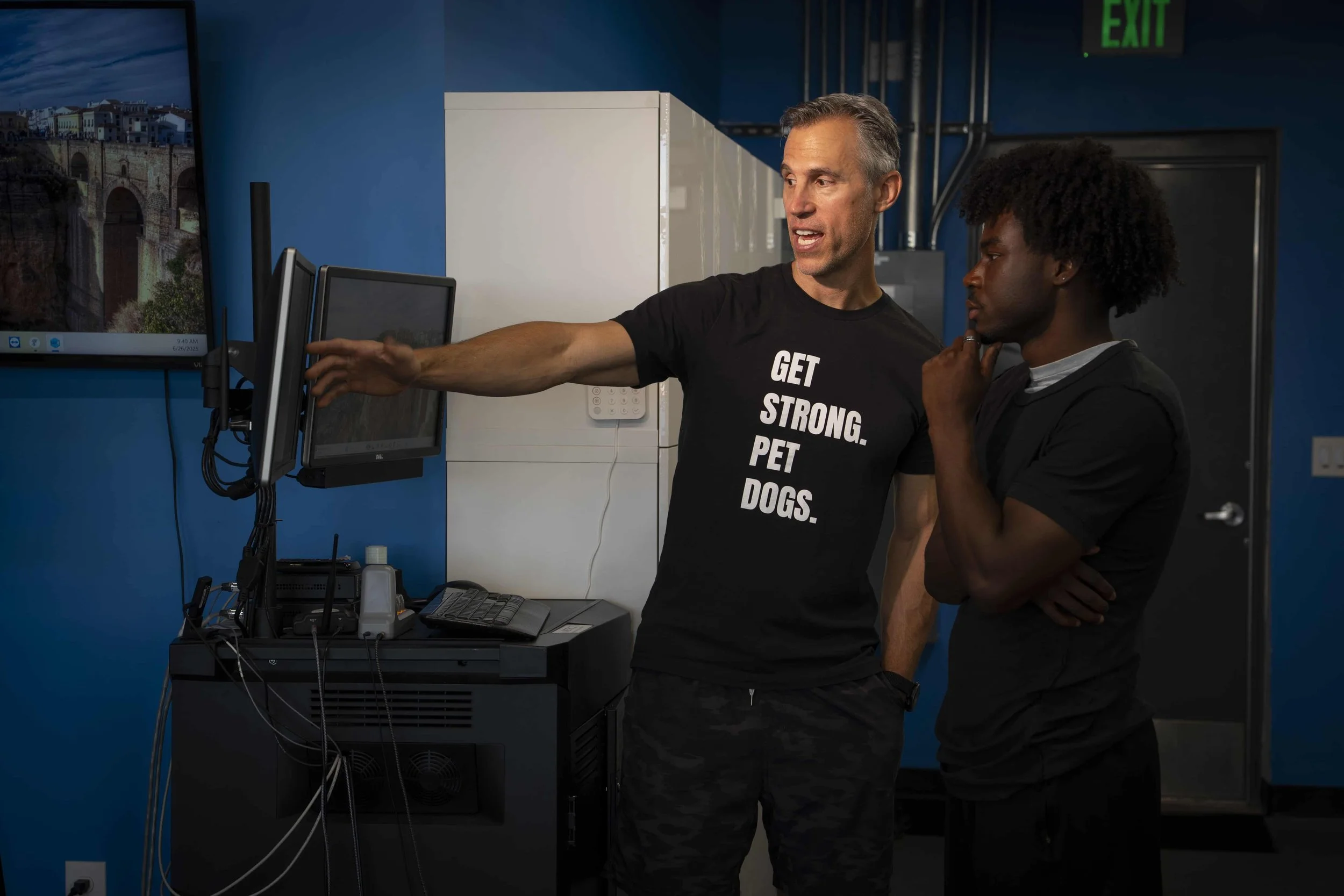
Gait analysis is the measurement of how you move when you walk or run. Running gait analysis looks specifically at your running mechanics: how your body is positioned through the stride, how often your feet strike the ground, and how load is shared across your joints and muscles as you go.
Our running gait analysis combines 3D motion capture with a plantar-pressure treadmill to measure how your entire lower body moves and manages force throughout each stride.
We compare your results with normative data to help identify movement patterns, strength deficits, and differences between sides that may be contributing to pain, limiting performance, or increasing your risk of injury.
Why patients trust our testing
During a running and gait assessment we can look at a range of measurements, including:
Cadence and step rate, or how many steps you take per minute
Ground contact and timing, or how long and how evenly your feet stay on the ground
Joint angles and positions through the stride, at the hip, knee, and ankle
Left to right symmetry, or how evenly work is shared between sides
Muscle activity and timing using EMG, which shows when selected muscles are active and can provide feedback during rehabilitation
Where it helps, we pair this with force plate testing, which measures how force is produced, absorbed, and distributed as you move, and with strength testing using VALD DynaMo. Each measure answers a different question. Together they build a fuller picture than any single test on its own.
Running injuries usually have several contributing factors. Training load, recovery, strength, movement, footwear, and your injury history can all play a part, and the mix is different for every runner. Gait analysis measures the movement part clearly. It does not by itself prove the single cause of a problem, and we will not pretend it does.
What it can do is identify factors that may be contributing to your symptoms or your running, and give us measurable things to work with, like step rate or loading, that we can revisit later to see whether the plan is working. We combine what the analysis shows with your history, your exam, and how you respond to activity, and the findings determine which factors actually matter for you.
What gait analysis can and cannot tell you
Most runners will deal with a niggle or an injury at some point, and the research is clear that running injuries rarely come from one thing. That is exactly why a single generic fix rarely holds.
We take a different starting point: measure how you move, strength, and control, look at your training and history alongside it, and identify the factors that may be contributing to your risk. From there we build a plan that fits you, coach it one on one, and retest so you can see what changed. We cannot promise you will never get injured, and no honest clinic can. What we can do is give you measured information and a plan built around it, rather than generic advice.
If you are looking for running injury prevention in Denver and want it grounded in real measurement rather than a handout, this is built for that.
Running injury prevention
For runners & marathoners
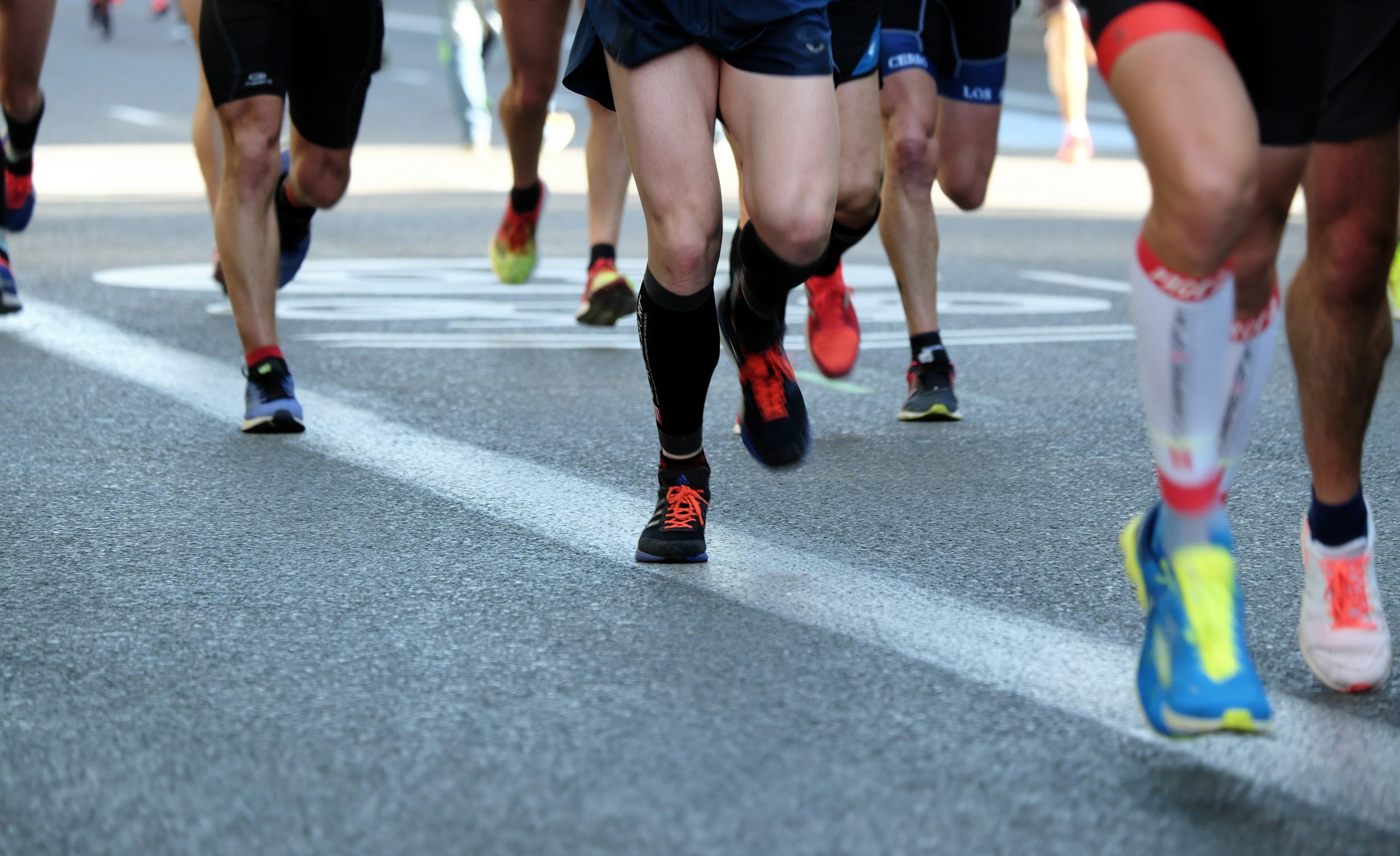
Denver is a running town, and we see a lot of runners: first time 5k finishers, trail runners, and people training for the Colfax Marathon and races beyond it.
If you want marathon training analysis, gait work pairs naturally with VO2 max testing, which measures your cardiorespiratory fitness and gives you a training baseline. Movement on one side, engine on the other. Together they help you train with information instead of guesswork, and see whether a block of training actually moved the numbers you care about.
Related: VO2 Max Testing and Performance
How gait analysis works at Studholme
Your assessment happens inside the same careful process we use for every patient. Your first visit runs about two hours and includes a full functional evaluation, so your gait findings sit in context rather than in isolation.
For the running and gait portion, you walk and run while we capture your movement in 3D, and where it helps we add EMG and force measurement. Afterward, we walk you through what we found, what it means for you, and what it suggests for how you should train or rehabilitate. You leave understanding the result, not holding a printout you cannot read.
If you are searching for gait analysis or running analysis in Denver, this is where to get it: measured, explained, and connected to an actual plan.
From analysis to a plan you do with us
Measurement is only useful if it changes what you do next. At Studholme, the analysis leads straight into the work.
Your follow up visits run a full hour: 30 minutes of hands on care and 30 minutes of guided rehabilitation and running form work, one on one, in the same visit. If a change to something like cadence makes sense for you, we coach it with real time feedback rather than just naming it. We film your home exercises through SparkMotion so you can repeat them correctly between visits, we load progressively, and we retest when it is appropriate so progress is measured, not assumed.
Gait findings often connect to the rest of your care. Runners dealing with knee pain, low back pain, or Achilles and tendon issues frequently benefit from seeing how they move, and we link the two together in your plan.
Explore Our Related Services: Sports Chiropractic and Injury Care · Knee Pain · Low Back Pain · VO2 Max Testing and Performance
Measured in 3D, not eyeballed
| A quick visual or phone video | 3D running and gait analysis | |
|---|---|---|
| What it captures | One angle, the obvious stuff | Movement from multiple angles at once |
| What you get | An impression | Measurements you can track over time |
| Muscle and load detail | Not visible | EMG timing and force measurement where it helps |
| What happens next | General advice | Findings combined with your exam, then a plan we build with you |
Why patients trust our testing
Studholme Chiropractic is led by Dr. Nick Studholme, who has practiced in Denver since 2000 and is AMIT certified. Our testing suite is unusual for a clinic our size, and we use it to answer clinical questions rather than to impress:
Noraxon 3D movement and gait analysis for how you actually move
EMG for muscle activity and feedback during rehabilitation
Force plate testing for force production, absorption, and distribution
VALD DynaMo for strength testing
VO2 max testing for cardiorespiratory fitness and a training baseline
We combine these measurements with your history, exam, and response to activity, and we film your rehabilitation through SparkMotion so you can do it right at home. We measure, we show you what we find, and we do the work with you.

Running Gait Analysis FAQs
-
Running gait analysis is the measurement of how you move when you run: your cadence, how load is shared across your joints, and your left to right symmetry. At Studholme we measure it with 3D motion capture rather than a single camera angle, which lets us track patterns that are hard to see with the eye alone.
-
It can measure cadence and step rate, ground contact and timing, joint angles through the stride, left to right symmetry, and, using EMG, when selected muscles are active. Where it helps we add force measurement, which shows how force is produced, absorbed, and distributed as you move.
-
Studholme Chiropractic offers 3D running and gait analysis at 1600 South Broadway, Denver, CO 80210. It is part of a full evaluation, so you leave understanding your results and what they mean for your training or recovery.
-
Running injuries usually have several contributing factors, so no assessment can promise to prevent them. What gait analysis can do is identify factors that may be contributing to your symptoms or risk and give us measurable things to work with, which we then revisit to see whether the plan is helping.
-
No. Gait analysis is useful for anyone who wants to understand how they move, including people dealing with knee, low back, or Achilles and tendon symptoms, not only runners. We tailor the assessment to your goals.
-
A phone video captures one angle and shows the obvious things. 3D analysis measures your movement from multiple angles at once and can add EMG and force data, so the findings are measurements you can track over time rather than an impression.

Ready to see how you move?
Book a visit and get a running and gait assessment that comes with context, a plan, and a team that does the work with you.