
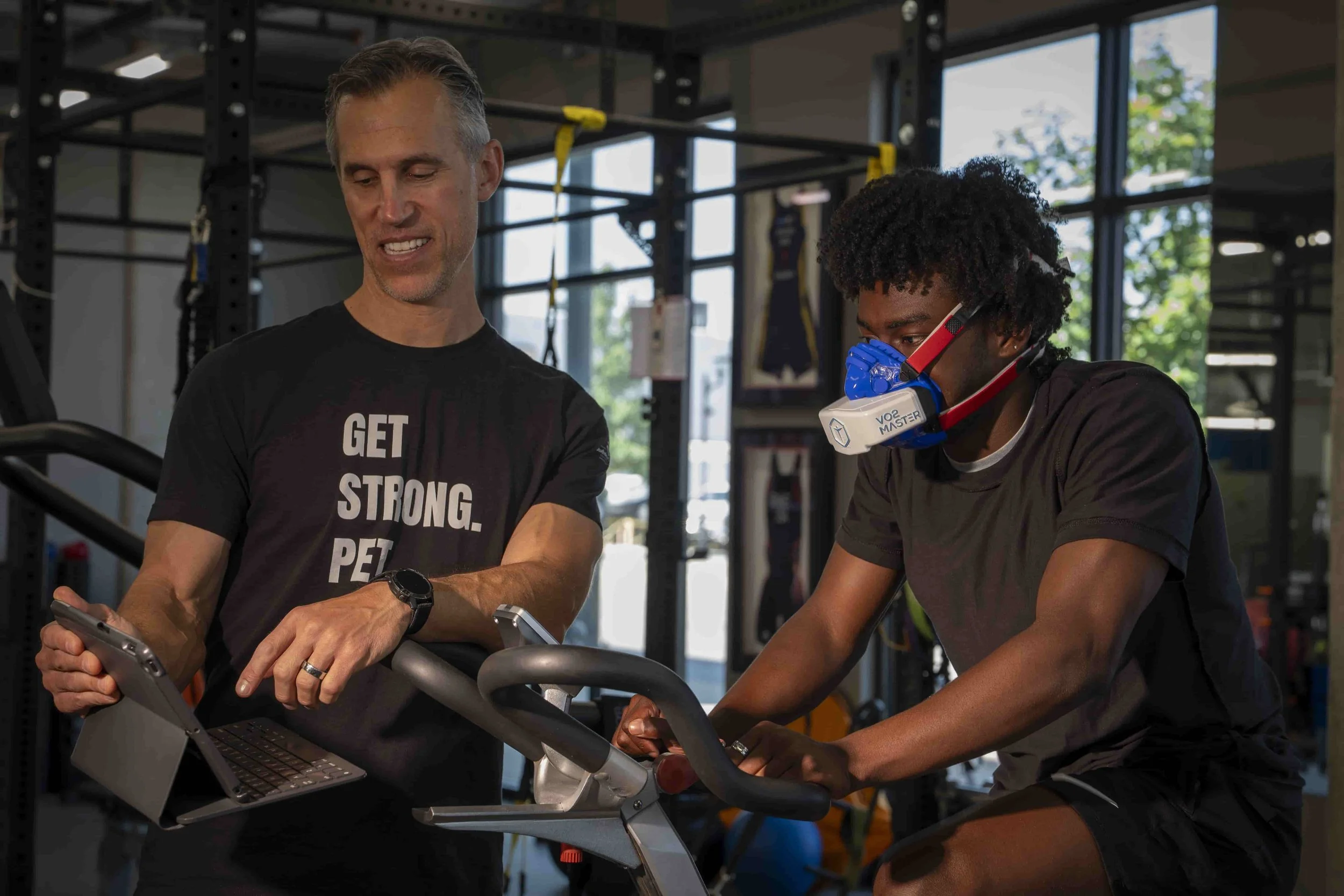
VO2 Max Testing and Performance in Denver
If you have searched for VO2 max testing in Denver, you are probably looking for one number that can tell you a great deal about your fitness: how well your body takes in and uses oxygen when you exercise. At Studholme Chiropractic on South Broadway, we measure your VO2 max directly rather than estimating it, giving you a clear starting point for improving your training, recovery, and long-term health instead of relying on a number from your watch.
VO2 max testing is one part of the testing we use to build a clearer picture of how you move and perform. We combine the results with your health history, physical examination, and movement testing to create a personalized treatment and training plan that we work through together.
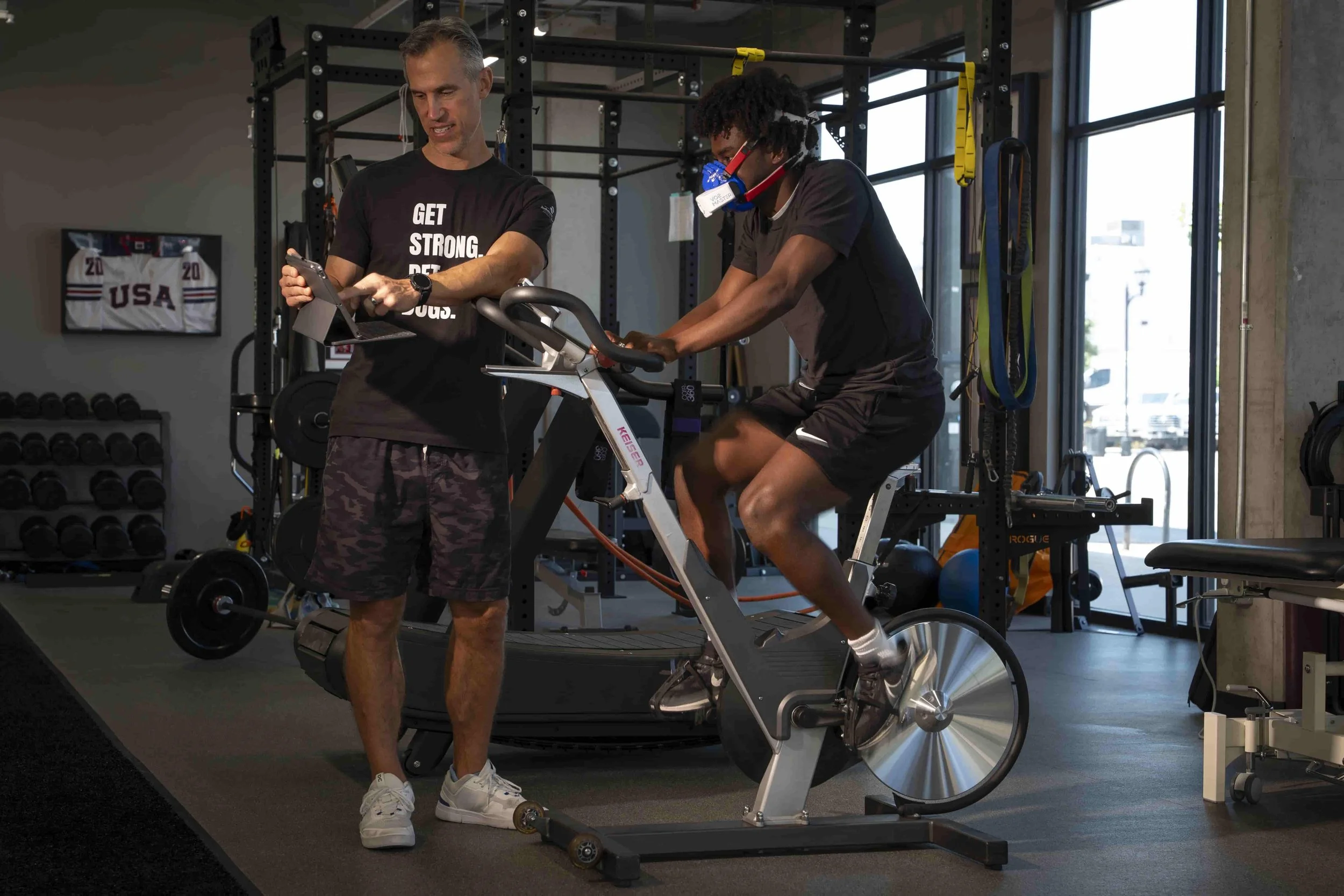
What Is VO2 Max Testing?
VO2 max is the maximum amount of oxygen your body can take in and use during hard exercise, reported in milliliters of oxygen per kilogram of body weight per minute (mL/kg/min). It is widely regarded as the clearest single measure of cardiorespiratory fitness, which is your heart, lungs, and muscles working together to deliver and use oxygen.
A VO2 max test measures this while you exercise at a rising intensity. You work on a treadmill or bike while the level increases in stages, and we record your breathing and effort as you go. The result gives us a measured baseline rather than an estimate.
That distinction matters. A fitness watch estimates VO2 max from your heart rate and pace and can be off by several points, especially if you are new to training. A measured test tells you where you actually stand, which is the number worth building a plan around.
For athletes, VO2 max is a ceiling. A higher number means a larger aerobic engine, which supports pacing, endurance, and how well you hold effort late in a race or a game. Tracking it over a training block shows whether your work is moving the number you care about.
VO2 max also carries information well beyond sport. Research has consistently linked higher cardiorespiratory fitness to lower risk of cardiovascular disease and lower all cause mortality, and some studies report it to be a stronger predictor of those outcomes than familiar risk factors. The American Heart Association has argued that cardiorespiratory fitness be treated as a clinical vital sign. This is an association seen across large studies, not a guarantee for any one person, but it is a large part of why VO2 max has become one of the numbers people track for healthspan, not just performance.
VO2 max tends to decline with age unless you train to hold it. That is the good news inside the number: it responds to the right work at any age, and measuring it is how you know whether that work is paying off.
What VO2 max tells you about performance and long-term health
What is a good VO2 max by age?
There is no single “good” number. VO2 max varies by age and by sex, and it is read against population reference ranges. The table below gives general reference ranges for where an above average score often falls. Athletes commonly sit well above these, and elite endurance athletes higher still.
| Men (mL/kg/min) | Women Men (mL/kg/min) | |
|---|---|---|
| Age 20-29 | ~ 48 and above | ~ 40 and above |
| Age 30-39 | ~ 45 and above | ~ 38 and above |
| Age 40-49 | ~ 42 and above | ~ 34 and above |
| Age 50-59 | ~ 38 and above | ~ 31 and above |
| Age 60+ | ~ 35 and above | ~ 28 and above |
The value of testing is not the label. It is having your own measured number, then watching it move in the direction you want as you train.
How VO2 max testing works at Studholme
Your test happens inside the same careful process we use for every patient. Your first visit runs about two hours and includes a full functional evaluation, not a five minute check. We take your history, examine you, and look at how you move before we put your VO2 max in context.
For the test itself, you exercise on a treadmill or bike while the intensity rises in stages and we record your response. Afterward, we walk you through what the number means for you, where it sits relative to your goals, and what it suggests for how you should train. You leave understanding your result, not just holding a printout.
If you are searching for where to get a VO2 max test in Denver, or the best VO2 max test for marathon training, this is built for exactly that: a measured baseline, a plan you understand, and retesting later so you can see whether the plan worked.
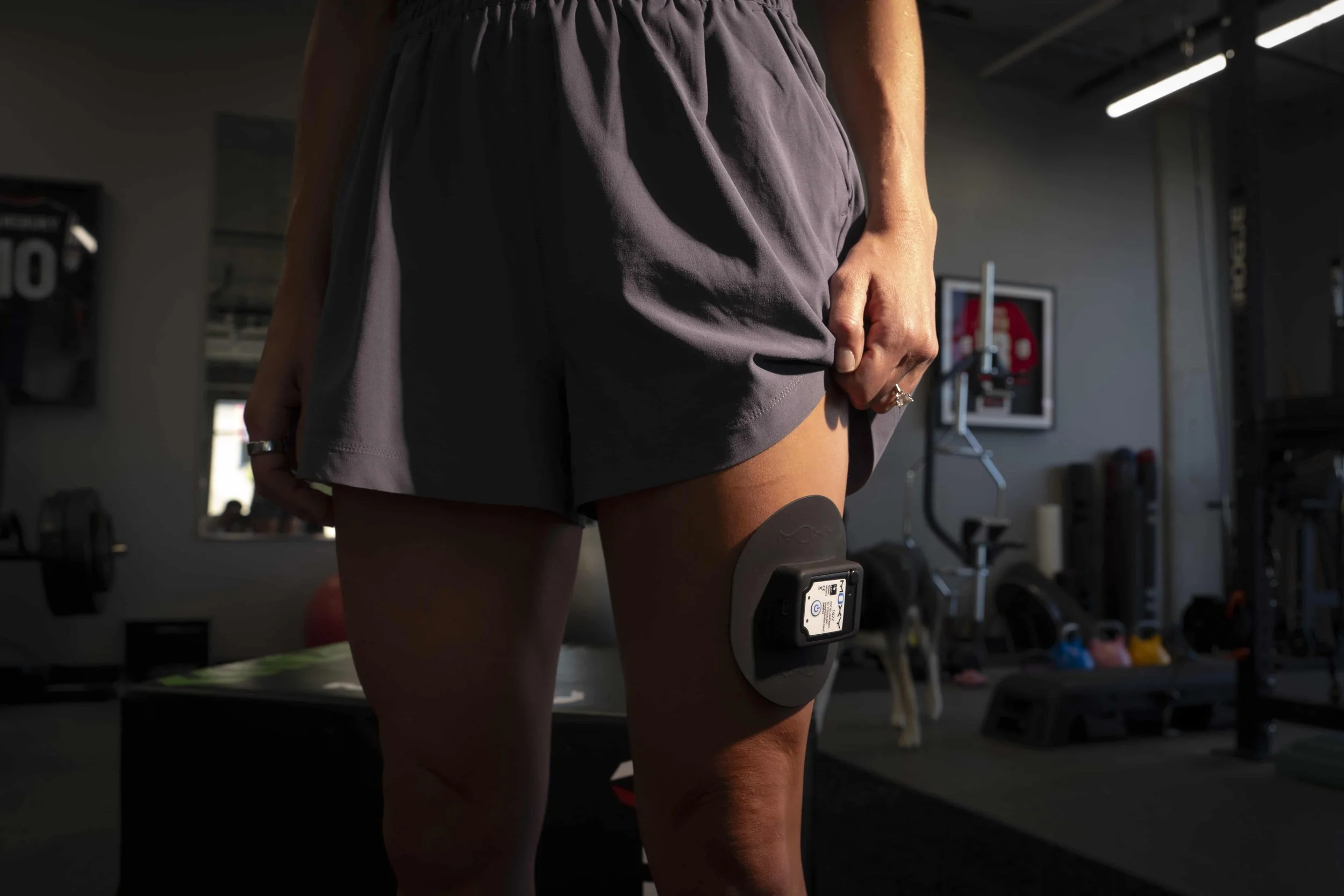
Muscle oxygen testing (MOXY)
VO2 max tells us about the whole system. Muscle oxygen testing tells us what is happening inside a specific working muscle while you exercise.
We use NIRS muscle oxygen testing (MOXY), a small sensor placed on the muscle that reads oxygen levels in real time as you work. Few clinics offer it. Paired with your VO2 max result, it helps us understand how a muscle is using oxygen under load, which can inform training intensity and pacing. It is another way we answer specific questions with a measurement rather than a guess.
How this connects to your rehab & training
Testing is only useful if it changes what you do next. At Studholme, the number leads straight into the work. Your follow up visits run a full hour: 30 minutes of hands-on care and 30 minutes of guided rehabilitation and corrective exercise, one on one, in the same visit. We film your home exercises through SparkMotion so you can repeat them correctly between visits. We load progressively, and we retest when it is appropriate so progress is measured, not assumed. VO2 max also connects to the rest of how we assess you. If you are a runner, we pair it with Noraxon 3D movement and gait analysis to see how you actually move. Strength and force testing add more detail on where you are strong and where you are not. Each measure answers a different question, and no single test gives the whole answer, so we combine them with what we see and hear from you to build the plan.
Explore Our Related Services: Sports Chiropractic and Injury Care · 3D Running and Gait Analysis
Measured, not estimated
| A fitness watch estimate | A measured VO2 max test | |
|---|---|---|
| How the number is produced | Predicted from heart rate and pace | Recorded while you exercise at rising intensity |
| Accuracy | Can be off by several points, especially in newer athletes | A measured baseline for you |
| What You Learn | A rough score | Your number, in context, with what it means for training |
| What Happens Next | You interpret it yourself | We walk you through it and build the plan with you |
Why patients trust our testing
Studholme Chiropractic is led by Dr. Nick Studholme, who has practiced in Denver since 2000 and is AMIT certified. Our testing suite is unusual for a clinic our size, and we use it to answer clinical questions rather than to impress:
VO2 max testing for cardiorespiratory fitness and a training baseline
NIRS muscle oxygen testing (MOXY) for real time muscle oxygen under load
Noraxon 3D movement and gait analysis for how you move
VALD DynaMo for strength testing
Force plate testing for force production, absorption, and distribution
EMG for muscle activity and feedback during rehabilitation
We combine these measurements with your history, exam, and response to activity, and we film your rehabilitation through SparkMotion so you can do it right at home. We measure, we show you what we find, and we do the work with you.

VO2 Max Testing FAQs
-
VO2 max testing measures the maximum amount of oxygen your body can use during hard exercise, reported in mL/kg/min. It is widely regarded as the clearest single measure of cardiorespiratory fitness. You exercise at a rising intensity while we record your response, which gives you a measured baseline instead of an estimate.
-
A good VO2 max depends on your age and sex and is read against population reference ranges. As a general guide, an above average score for a man in his 30s often falls around 45 mL/kg/min or higher, and around 38 or higher for a woman in the same range. Athletes commonly score higher. The most useful comparison is your own number over time.
-
Studholme Chiropractic offers VO2 max testing at 1600 South Broadway, Denver, CO 80210. Testing is part of a full evaluation, so you leave understanding your result and what it means for your training.
-
Research has consistently linked higher cardiorespiratory fitness to lower risk of cardiovascular disease and lower all cause mortality across large studies. This is an association rather than a guarantee for any one person. VO2 max also responds to training at any age, which is why many people track it as a long term health marker.
-
NIRS muscle oxygen testing (MOXY) uses a small sensor on the muscle to read oxygen levels in real time while you exercise. Paired with a VO2 max result, it helps us understand how a specific muscle uses oxygen under load, which can inform training intensity and pacing. Your evaluation helps us determine which factors are relevant in your case.
-
Yes. VO2 max responds to consistent aerobic training at any age, though the rate of change varies from person to person. Retesting is how you confirm whether your training is moving the number.
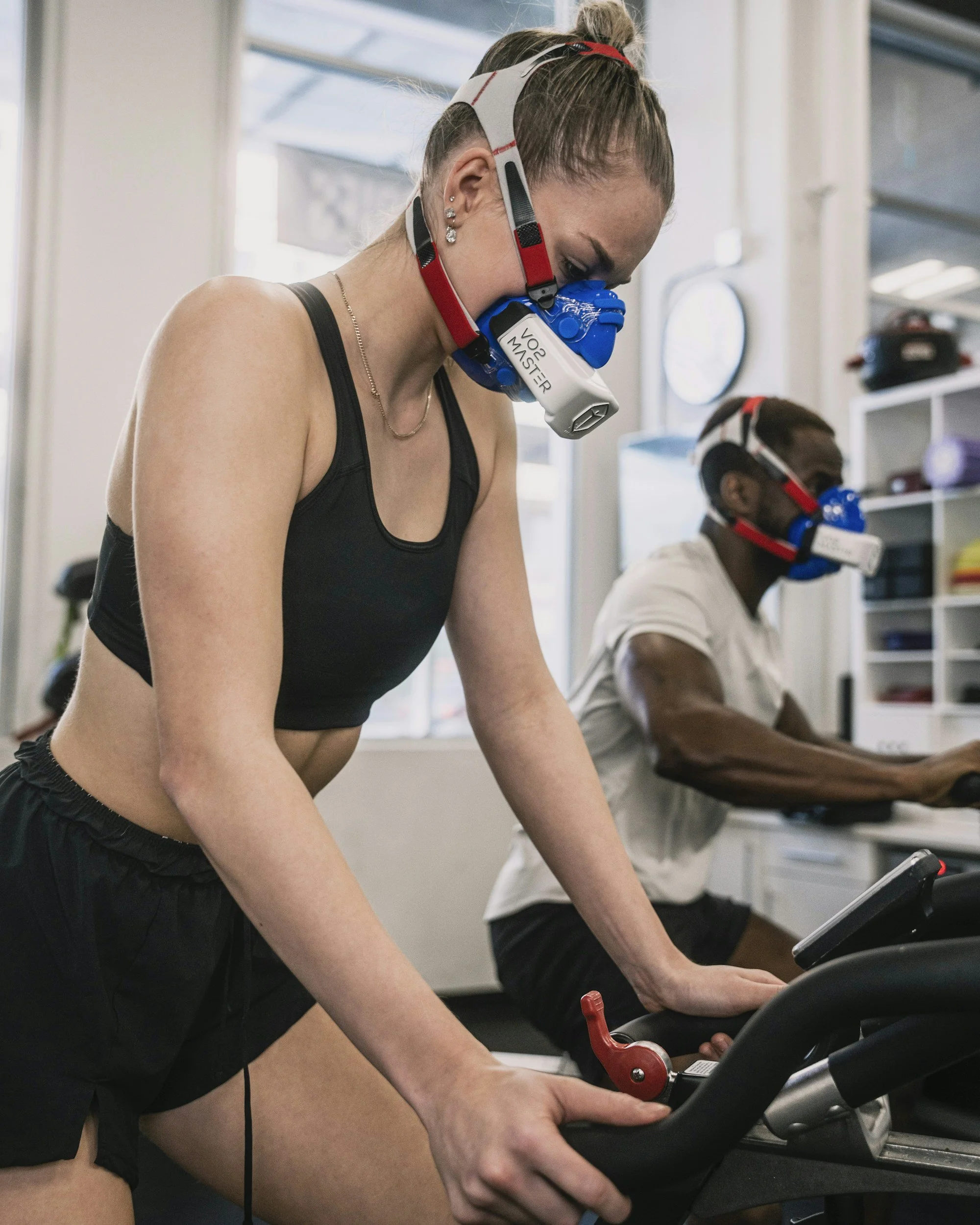
Ready to get your baseline?
Book a visit and get a VO2 max test that comes with context, a plan, and a team that does the work with you.